

The introduction of generative AI into daily workflows is reshaping the way we approach cognitive tasks. It helps reducing micro‑decisions, interruptions, and repetitive steps that normally weigh down analytical work. Yet the most important impact is not just efficiency: AI is changing how our 2 Thinking Systems share the mental load.
This shift affects how we manage continuity, rhythm, and depth while working. It marks the beginning of a new way of supporting the mind: a work environment where human cognition and AI collaborate to create better conditions for focus and flow.

Two Systems, One Overloaded Way of Working
Daniel Kahneman describes two systems that guide our thinking.
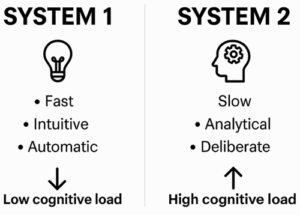 System 1 is fast, intuitive, based on learned patterns, cheaper in terms of brain energy consumption; like an experienced runner who can immediately sense whether their pace and technique feels smooth and efficient.
- System 2 is slow, analytical, and deliberate; it’s the system we use when evaluating options, correcting errors, or making precise decisions. It is powerful, but also the most energy‑consuming part of our mind.
Today’s work environment, filled with emails, meetings, messages, notifications, and constant switching between tasks, forces System 2 to operate far more than necessary.
This creates cognitive fatigue and reduces our ability to maintain deep focus.
Researches (see sources at the end of this article), show that prolonged activation of System 2 increases the levels of a stimulating chemical (glutamate).
This causes the brain to become more and more fatigued, and this leads to an automatic and natural reduction of its effort. The effects? Lower quality of decision making and less mental availability to “perseverance”.
In simple terms: the brain tries to protect itself from overload.
The root cause?
The modern work, by design, does not support that state.
This makes the State of Flow very rare. To talk in Kahneman words, the perfect Flow state in when System 1 leads and System 2 supervises lightly – meaning that System 2 presence is just the barely minimum to remain attentive to any changes.
The Fragility of Flow: What Studies Show
Flow is not just “Great! I am feeling focused and productive!”. It is a specific mental configuration.
Researches teaches us that, during flow, the brain reduces activity in areas linked to monitoring and self‑control, while attention networks and automatic‑skill networks work together more smoothly.
It is a mind with less internal friction.
In sports is that sensation when a swimmer or runner suddenly feels the technique “hook in” almost automatically.
Flow, however, is extremely fragile. Three factors break it instantly:
- Fragmentation: every interruption forces System 2 to restart
- Entropy: unnecessary complexity that leads the mind to shift into defense mode
- Unevenness: broken rhythms without fast feedback, cause the sense of progress disappears
It’s like asking a runner to stop every kilometer to tie his shoe. They never find rhythm, continuity, or the natural progression that leads to smooth performance.
Role of AI in the Redistribution of Cognitive Load
This is where AI introduces an important shift.
Generative AI does more than save time: it can redistribute cognitive load between System 1 and System 2. It removes many tasks that consume attention without adding value. It reduces interruptions, keeps context stable, and takes over minor decisions that exhaust System 2.
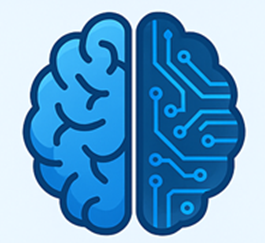 Two effects we love the most can be observed when AI is used correctly in that sense:
- Less switching: AI reduces continuous jumps between tools and information.
- Instant Feedback: examples, suggestions, and corrections arrive immediately, supporting a smooth mental rhythm.
In software development, this is already visible.
| GitHub’s research on Copilot shows that 73% of developers feel they “stay in flow more easily” thanks to AI. To be clear, This is not a neuroscience study; however, it aligns perfectly with what we know: removing friction increases the chance of entering flow. The same pattern appears in the DORA 2025 report, which highlights reduced mental load, better continuity, and more cognitive clarity. |
In sports terms: AI is like removing the headwind; like a cyclist getting behind the one in front and then shielding herself from the wind. It doesn’t just increase speed, it stabilizes the pace.

AI creates a more stable mental environment. On that foundation, System 1 can work more smoothly and for longer.
Flow as a Consequence, Not a Promise
A common mistake is believing AI creates flow per sé. It doesn’t.
AI does not generate flow. It helps create the conditions needed for flow to emerge.
Studies show that flow requires clear goals, immediate feedback, and a balance between challenge and skill. For more information on this specific topic see Leaders, Protect Focus or Lose Performance.
Generative AI supports all these conditions.
But there is a risk: if AI removes too much complexity, work becomes too easy. This does not create flow or focus; it creates a comfort zone: when you lose the challenge, technique stops improving, motivation drops, grow stops to happen.
For leaders, the right question is not “How much faster does AI make us?” The good one is:
Which part of the challenge does AI make more accessible and which other part helps us grow?
AI is valuable when it removes useless complexity. Not when it removes meaning and challenge.
The New Cognitive Work Environment
The impact of AI allows us to build a new kind of work environment; one aligned with how the mind actually performs at its best.
It means reducing unnecessary cognitive load, protecting mental rhythm, supporting System 1 in its automatic skills, and keeping the challenge at the right level to stimulate engagement and flow.
What leaders should do?
- Design workflows that don’t overload System 2
- Use AI to reduce friction and interruptions
- Protect time and space for deep focus
- Keep tasks meaningful and inherently challenging
- Predispose tasks according to people and teams’ skills
Organizations that combine AI, thoughtful work design, and a culture of attention will gain a real advantage: people who are clearer, more capable of handling complexity, and able to work with greater fluidity and sustainability.
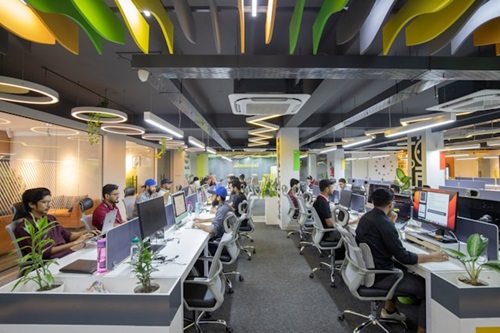
Performance doesn’t come from constant pressure. It comes from the quality of attention.
And today, for the first time, we have tools to actively shape it.
👉 Are you wondering how to make it happens and looking for a framework to solve these problems? Well,it exists!
🔥Stay tuned! In the next post I will cover it.
---
Sources
- A neuro-metabolic account of why daylong cognitive work alters the control of economic decisions
- A Review on the Role of the Neuroscience of Flow States in the Modern World
- Neural signatures of experimentally induced flow experiences
- Quantifying GitHub Copilot’s impact on developer productivity and happiness
- DORA Research: Artificial Intelligence

